Repiping replaces worn supply pipes with new copper or PEX, either for the whole house or a section. In Los Angeles it often comes up in homes built before 1980 with galvanized steel. Call the number on this page to be connected with a local plumber in Los Angeles.
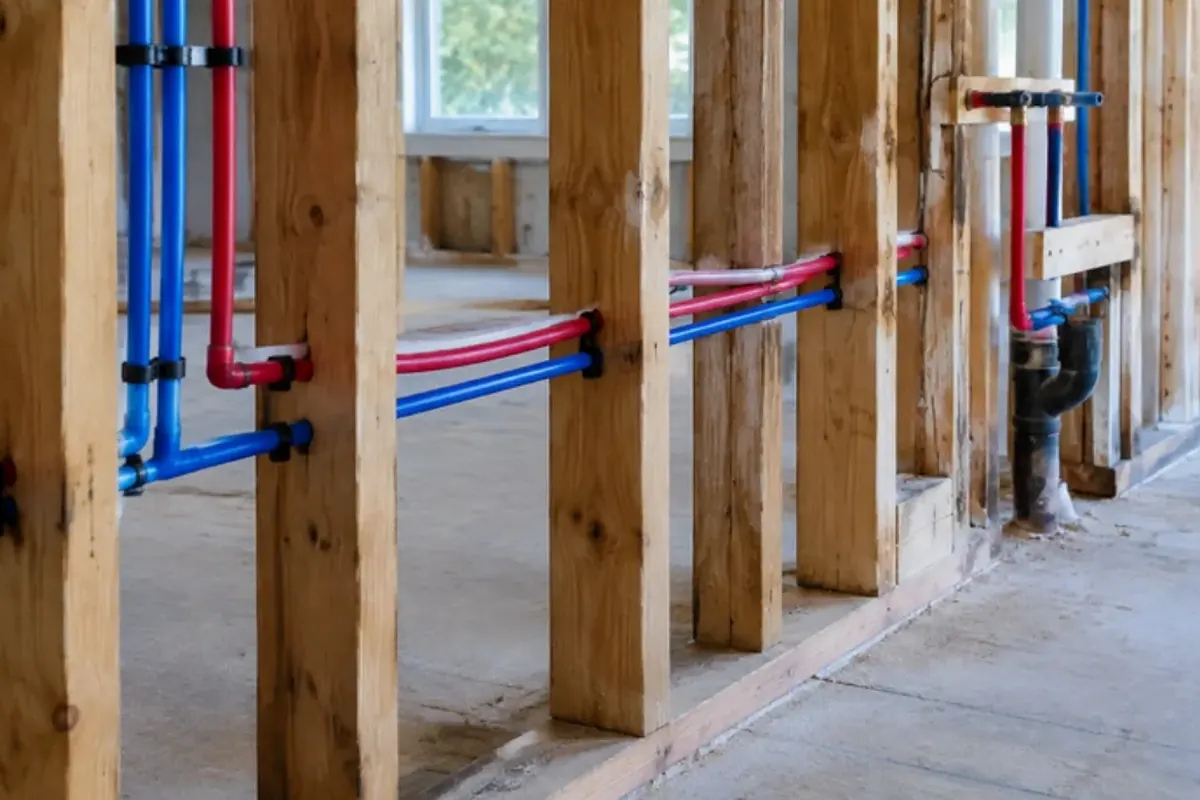
Roughly 72 percent of housing in the City of Los Angeles was built before 1980, and the median home dates to about 1964. Many of those houses, in neighborhoods like Boyle Heights, Leimert Park and the older parts of the San Fernando Valley, still have their original galvanized steel supply lines, and some later homes were built with polybutylene. Neither tends to age gracefully.
Signs the pipes are due
- Leaks that keep appearing in different places
- Brown or rusty water, especially after the water has sat unused
- Pressure that is weak at several fixtures
- Visible corrosion, crusty buildup or green stains on copper
- Polybutylene pipe, usually gray plastic
Hard water adds to the wear. LADWP reports hardness that varies widely by source, from about 103 mg/L for Los Angeles Aqueduct water to roughly 234 to 236 mg/L for water from the Metropolitan Water District plants, so scale buildup differs between neighborhoods. Your LADWP water quality report lists what applies to you, and our hard water guide explains the effects.
Copper, PEX and how the work goes
Copper is durable and familiar. PEX is flexible, which can mean fewer cuts in walls and less patching, and many plumbers fit it through attics and crawlspaces in raised-foundation bungalows. Slab homes complicate things, because lines that run under the concrete may be abandoned and rerouted overhead rather than dug up, a method often discussed alongside slab leak repair. The plumber will walk the house, test pressure and suggest a plan. Expect water shutoffs during the job, and some drywall access cuts that need patching.
Partial repiping is possible. If one bathroom or one run is failing and the rest is sound, replacing only that section can make sense, but a plumber may advise a whole-house job if multiple lines are corroded. Cost depends on house size, the number of fixtures, access, wall finishes and whether the lines run through a slab, so ask for a written scope that spells out patching.
Permits and contractors
Repiping generally needs a permit and an inspection. In the City of LA, LADBS issues plumbing permits through its Development Services Centers, and other cities use their own building departments. Confirm the plumber pulls the permit. California requires a contractor license for work of $1,000 or more in combined labor and materials, so look up the contractor on the CSLB License Check tool.
Since the work opens walls, it is a good moment to review related items such as the water service line and whether the water heater connections and earthquake straps are in good shape.
Repiping questions from Los Angeles homeowners
How do I know if my home has galvanized pipe?
Do I need to repipe the whole house?
Can I stay in the house during repiping?
Is a permit required?
Related plumbing services in Los Angeles
Helpful guides
Repiping in nearby cities and towns
Los Angeles County
Orange County
Ventura County
Sources
Last updated: